

The Science of Yoga Nidra
The Physiology of Non-Sleep Deep Rest
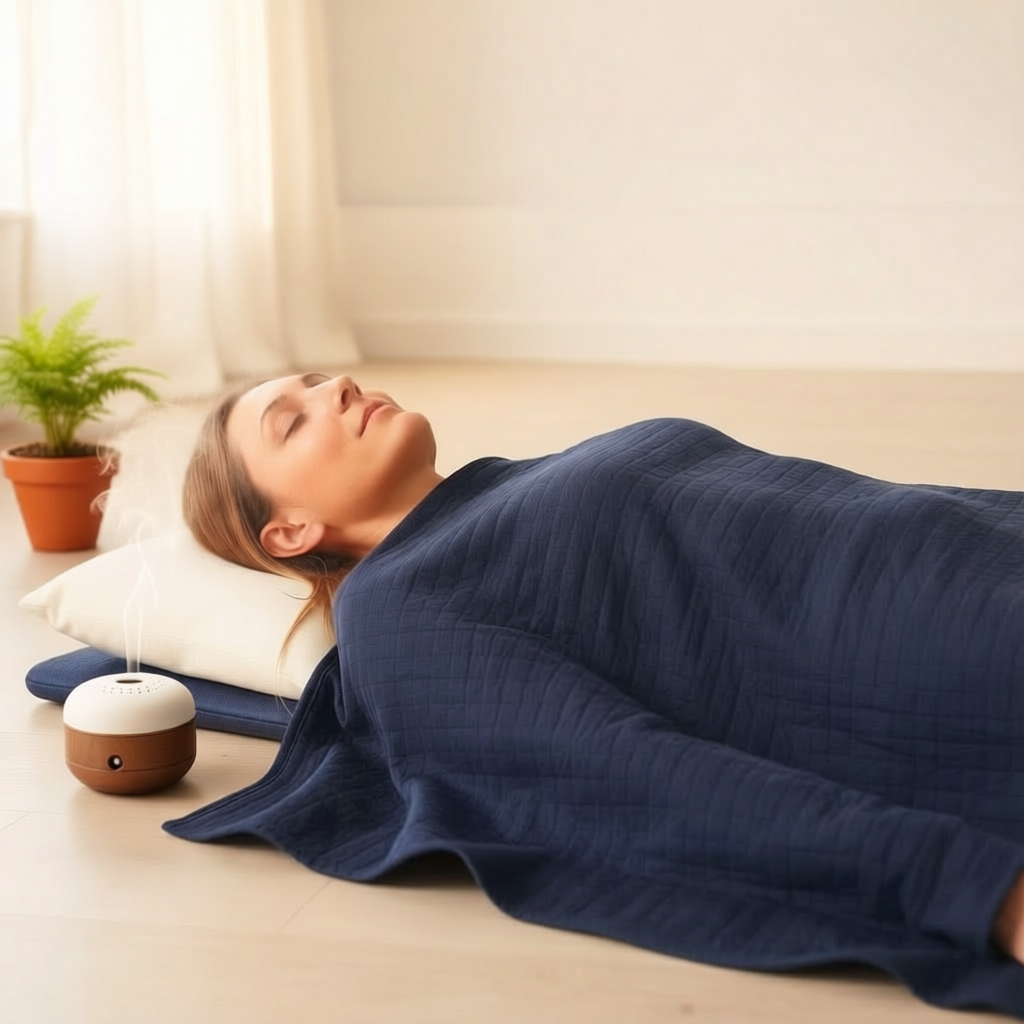
While the mind remains awake, the body is guided into a state of physiological repair typically reserved for deep sleep. This process, often referred to in clinical research as Non-Sleep Deep Rest (NSDR), allows for the systematic down-regulation of the sympathetic nervous system. By consciously hovering between wakefulness and sleep, we bypass the "on" switch of the modern world and access the brain’s natural capacity for neuroplasticity and recovery.
The Mechanics of Stillness

Yoga Nidra systematically down-regulates the amygdala, the brain's almond-shaped emotional processing center. By guiding the body into a state of profound physiological safety, the practice "mutes" the chronic fight-or-flight response that characterizes modern life. This allows the nervous system to transition from a state of hyper-vigilance into a restorative mode where true emotional processing and cellular healing can begin.
In this quiet place, the frantic pace of external demands fades into the background. You are not just resting; you are training your brain to recognize that even in a chaotic world, a core of unshakeable safety is always accessible to you.
The Limbic System

Your brain is physically shaped by your experiences and consistent thought patterns. When we practice Yoga Nidra, we are intentionally creating new neural pathways that favor a calm baseline over a stressed one. Through the systematic rotation of consciousness, we leverage the brain's plasticity to hardwire resilience, making a state of interior peace easier to access even when you are away from the mat.
This is the nature of the practice: you are not merely coping with stress, you are physically remodeling your capacity for peace. Over time, the stillness you cultivate on the mat begins to follow you into your waking life, creating a more resilient and centered version of yourself.
Neuroplasticity

Chronic stress leaves a physical residue in the body in the form of elevated cortisol. Yoga Nidra acts as a biological "flush," signaling the endocrine system to cease the production of stress hormones in real time. This shift allows the parasympathetic nervous system to take the lead, facilitating lower blood pressure, improved immune function, and a significant reduction in the physical inflammation caused by a perpetually "on" lifestyle.
Think of this as a complete reboot for your internal chemistry. By lowering the inflammatory load on your system, you provide your body with the metabolic window it needs to repair, recharge, and return to a state of vibrant, natural vitality.
Cortisol Regulation

During a session, you are guided through a specific sequence. It shifts your brain waves from the alert Beta state to the relaxed Alpha state, and finally into the "healing zone" of Theta and Delta waves. In these deeper frequencies, usually only accessed during the deepest stages of sleep, the body performs critical repair and the mind experiences a unique state of wakeful rest that refreshes the psyche and restores cognitive clarity.
This unique "hypnagogic" state provides a profound efficiency of rest that standard sleep often fails to reach. By dipping into these slower frequencies, you emerge with a "brain fog" cleared and a deep sense of mental integration that supports both creativity and focus.
Brain Wave States
The Conclusion: From Evidence to Experience
The Science of Stillness is the Science of You
The clinical data confirms what the body inherently understands: deep, intentional rest is not a luxury; it is a biological imperative. By understanding the mechanics of Yoga Nidra, we move beyond the concept of simple relaxation and into the territory of systemic healing. Whether you are seeking to regulate a taxed nervous system or looking to cultivate a more resilient baseline, the evidence is clear. The path to restoration begins the moment you give yourself permission to do nothing.
Selected Reseach and Clinical References
Stress and Anxiety Reduction
Study: Study on the impact of Yoga Nidra on anxiety and stress. (Kumar, 2008)
Focus: Direct evidence of Yoga Nidra as a successful tool for reducing physiological and psychological stress markers.
Link: ResearchGate Citation
2. Efficacy in Managing Sleep Disorders
Study: Efficacy of Yoga Nidra in Managing Sleep Disorders: A Systematic Review of Randomized Controlled Trials (2018).
Focus: Evaluation of significant improvements in sleep parameters such as onset latency, total sleep time, and sleep efficiency.
Link: PubMed Central (PMC6134739)
3. Sleep Quality and Mental Health
Study: The effects of Yoga Nidra on sleep and quality of life: A systematic review. (Ferreira-Vorkapic et al., 2018)
Focus: A comprehensive review of how Yoga Nidra improves sleep latency and overall mental well-being.
Link: PubMed Central
4. Autonomic Nervous System Regulation
Study: Yoga Nidra and Autonomic Nervous System Regulation. (Markil et al., 2012)
Focus: Research on how the practice improves Heart Rate Variability (HRV) and regulates the nervous system.
Link: PubMed Central
5. Neuroplasticity and Brain Structure
Study: Meditation experience is associated with increased cortical thickness. (Lazar et al., 2005)
Focus: Evidence that consistent deep rest practices physically thicken the prefrontal cortex, the area responsible for focus and calm.
Link: PubMed Central
6. Management of Insomnia in Postmenopausal Women
Study: Yoga Nidra, a Nonpharmacological Technique in Management of Insomnia and Overall Health in Postmenopausal Women (2023).
Focus: Investigates therapeutic potential for improving sleep quality, quantity, and overall well being in the postmenopausal phase.
Link: PubMed (38501518)
7. Psychological Resilience
Study: Yoga Nidra in the management of psychological illness. (Rani et al., 2011)
Focus: Investigates the practice as a therapy for anxiety, depression, and long-term psychological resilience.
Link: PubMed Central
8. Cognitive Performance and Focus
Study: EEG changes and cognitive performance after Yoga Nidra. (Datta et al., 2017)
Focus: Demonstration of improved reaction times and cognitive clarity following a systematic deep rest session.
9. Origin and Clinical Relevance
Study: The Origin and Clinical Relevance of Yoga Nidra (2022).
Focus: Summarizes physiological and psychological effects, including changes in endogenous dopamine release and cerebral blood flow.
Link: PubMed Central (PMC9033521)
10. Sleep Lab Investigations
Study: A closer look at yoga nidra: early randomized sleep lab investigations (2023).
Focus: Examines physiological effects in adults with insomnia, showing significant changes in respiratory rate during and after practice.
Link: PubMed Central (PMC9973252)
11. Impact on Stress, Anxiety, and Depression
Study: Effects of Yoga Nidra on Stress, Anxiety, and Depression: A Systematic Review and Meta-Analysis (2025).
Focus: A rigorous assessment showing significant benefits for reducing stress, anxiety, and depression compared to control groups.
Link: PubMed (41327816)
12. Qualitative Impressions for Insomnia
Study: Qualitative Impressions of a Yoga Nidra Practice for Insomnia: An Exploratory Mixed-Methods Design (2023).
Focus: Explores participant experiences, suggesting the practice is useful for enhancing relaxation, facilitating sleep, and easing anxiety.
-
While falling asleep is a natural response to deep relaxation, the primary goal of Yoga Nidra is to remain "awake at the edge of sleep". Biologically, staying in this hypnagogic state allows your brain to hover between Alpha and Theta waves, which is the "sweet spot" for neuroplasticity and emotional integration. If you do drift off, do not worry; your subconscious mind continues to process the guidance, and the restorative benefits of the session are still physically realized.
-
In standard meditation, you are often focusing your attention on a single point, such as the breath, while in an upright, alert posture. Yoga Nidra is a systematic process of withdrawal (Pratyahara) performed while lying down, which leads the body into a state of "Non-Sleep Deep Rest" (NSDR). Unlike hypnosis, where a therapist might suggest specific behavioral changes, Yoga Nidra is a self-led journey that uses a Sankalpa (a personal resolve) to plant seeds of change in the fertile, relaxed soil of the subconscious mind.
-
Absolutely—in fact, this practice is specifically designed for high-cortisol, over-stimulated nervous systems. Because the practice provides a constant stream of "rotational" sensory guidance (moving your awareness from one body part to the next), it gives the busy mind a gentle task to focus on. This prevents the "mental loops" that often occur in silent meditation, making it a highly accessible entry point for those with chronic stress or anxiety.
-
A single session acts as a powerful "reset" for the autonomic nervous system, immediately lowering heart rate and flushing stress hormones like cortisol. Research shows that the "afterglow" of deep relaxation and improved mood can last for several hours to days. However, the most profound changes—such as structural neuroplasticity and long-term limbic regulation—are cumulative and become more stable with a consistent weekly practice.
-
Yoga Nidra is generally safe for most people, but there are important medical considerations. Those with severe clinical depression, untreated PTSD, or certain types of psychosis should consult with their healthcare provider first, as the deep internal focus can sometimes bring up intense emotional material. We maintain a dedicated Medical Considerations page to ensure every student can approach the practice with safety and confidence.